

Light up your Christmas. The most illuminated night in Colombia.

Light up your Christmas. The most illuminated night in Colombia.

The night of the candles, a Colombian tradition

Por: Camila Garcia Voelkl.

In many cultures, Christmas season is characterized by its lights. We light up the tree, we decorate the houses with colored lights and the cities illuminate their streets and main squares. In Colombia, there is a beautiful tradition where the Christmas lights take center stage and it is known as the night of the candles.

How was this tradition born?

Colombia is a country with very strong Catholic roots. The Catholic Church celebrates the Immaculate Conception of the Virgin on December 8, where it is remembered that the Virgin Mary was sinless (immaculate) from her conception. In 1854, colonial times, the tradition of celebrating the Virgin with candles to illuminate her path was consolidated in Colombia. “According to certain theologians, such as Álvaro Rodríguez Vásquez, the night of the candles means the illumination that God made in the Virgin and her acceptance of that divine process”1

Although this celebration is of religious origin, for Colombians it also has a big family and cultural connotation.

The brightest night.

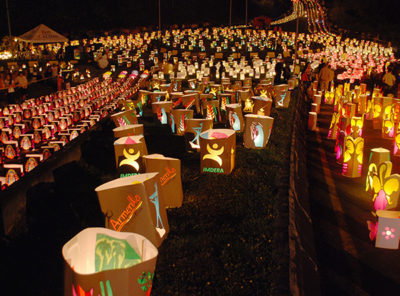
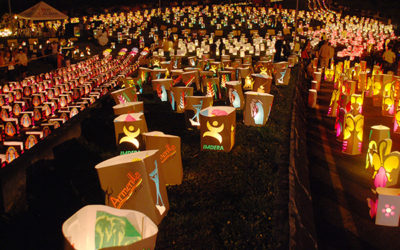
The night of the candles begins on the night of December 7 and the early morning of December 8 when family and friends gather to light up their houses, streets and squares with lanterns, candles and colored gunpowder, in the midst of a festive atmosphere. In some cities like Medellín and Barranquilla, the lights are also placed on the riverbank.

Photo by: http://asomecosafro.com.co/
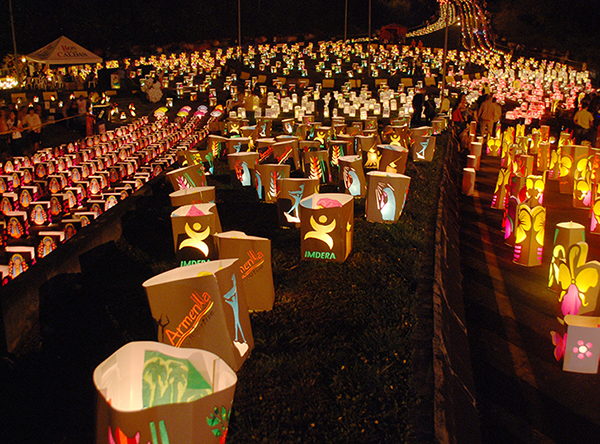
It is perhaps the brightest night of the year in Colombia and the beginning of a month of festivities. It is a tradition full of joy. Each candle is lit with an intention of gratitude for the good things of the current year and with the best wishes for the coming year. For others it is a way to remember loved ones who are no longer with them. For the vast majority, one more reason to share a moment of joy with the family.

Foto por: Cristian Mercado https://zonacero.com/
Join the tradition.

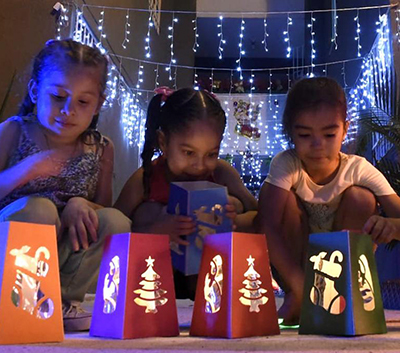
The night of the candles is a reason to share and spend time together. For the little ones, the lights fill the moment with magic and become unforgettable moments of the season. The tradition is not limited to the night. It starts with making handmade lanterns at home using colored paper and decorating them with Christmas motifs. The tradition is to use wax candles and gather around the candles, telling stories and sharing something to eat while watching the candles burn little by little. However, for safety reasons with small children, you can also use LED lights.

How to make a lantern at home:

Si encontraste util este post, ayudame a seguir compartiendo nuestras tradiciones!

“We have two ears and one mouth so that we can listen twice as much as we speak”

“We have two ears and one mouth so that we can listen twice as much as we speak”

Listening: The first skill to aquire when learning a new language

Por: Camila Garcia Voelkl.

The art of learning is always a cumulative process, whatever the content. We learn in various ways and use all our senses for them. The art of learning a language, whether for the first time or as an additional language, requires 5 main skills, listening, speaking, understanding the culture, writing, and learning to read.

Although we must work on the 5 synergistically, it is important to emphasize that the first aptitude: Listening, is one of the most important.

Sound is the basis for communication in all spoken languages. Whichever language you decide to pursue, you must learn how to listen so that you can understand what has been said. It is the same as when you learn your first language as a baby, we spend more than six months just listening and understanding, to later start babbling some words until we can create full sentences. This process takes us around two to three years and a lifetime of continuous learning and improvement.
Human brains evolved to acquire oral comprehension first and a second language is not any different. Even though we are capable of learning faster, the process is similar.

“Research shows that when we communicate, we spend around 40-50% of our time listening, 25-30% speaking, 11-16% reading and only 9% writing (although that last one might have changed in recent years due to the rise in social media).” (https://www.fluentu.com/blog/)

So, why should listening be the first skill to be taught?

Many learners are eager to start talking in their new language. Many even consider that if they are not able to talk a couple of sentences, then they do not know the language. This is not true. The first phase of learning is by listening and being capable of understanding. You can be engaged in conversations among native speakers even when your speaking skills are minimal, but if you cannot understand what they are saying, you will inevitably tune out and feel isolated.

Learning to listen to the target language improves language ability. The sound, rhythm, intonation, and stress of the language can only be perfectly adapted through listening. 

It is very important to note that listening is different from hearing. Listening involves an active and conscious process where the student is mentally present.

Dr. Michael Rost, Ph.D. in linguistics (1994) explains the importance of listening in a language classroom as follows:
 

  1. Listening is vital in the language classroom because it provides input for the learner. Without understanding input at the right level, any learning simply cannot begin.


  2. Spoken language provides a means of interaction for the learner. Because learners must interact to achieve understanding. Access to speakers of the language is essential. Moreover, learners’ failure to understand the language they hear is an impetus, not an obstacle, to interaction and learning.


  3. Authentic spoken language presents a challenge for the learner to understand language as native speakers actually use it.


  4. Listening exercises provide teachers with a means for drawing learners’ attention to new forms (vocabulary, grammar, new interaction patterns) in the language (p.141-142).

Teachers need to Commit to teaching Listening skills.

We may think that listening is a simple skill but when it comes to a second language it is not that easy. When our mind doesn’t understand what is said fast enough, it tends to get distracted. The student needs to practice and work on their language skills as much as possible and language teachers need to think of how we can incorporate listening into our teaching and provide opportunities both inside and outside the classroom for our students to be exposed to significant listening input. 

A great technique to help students learn to listen is to use Top-down strategies. These strategies focus on concepts and not specific words. The goal is for the learner to understand the overall meaning of what is being said and not only specific words. By using their knowledge of context and co-text, learners should either be able to guess the meaning of the unknown word or understand the general idea without getting distracted by it.

Some examples of how to use top-down strategies are:

  1. listening activities that include putting a series of pictures or sequence of events in order

  2. listening to conversations and identifying where they take place

  3. Listening to Bingo/Loteria games

  4. Dicto-drawing: Give spoken instructions on how to draw something and the student should follow your directions.

  5. Games to follow instructions or directions

Other easy ways to practice listening for foreign language acquisition are by listening to music in the target language, watching movies, or getting immersed in conversations with native speakers.

As one of my students reminded me and his classmates in one of my recent classes: We have two ears and one mouth so that we can listen twice as much as we speak.

    Enjoy the process not only the result!

    References:

    Rost, M. (1994). Introducing listening. London: Penguin books.
    https://www.ripublication.com/ijeisv1n1/ijeisv4n1_13.pdf

    The day of the dead

    The day of the dead

    The day of the dead in LatinAmerican countries
    Por: Camila Garcia Voelkl.
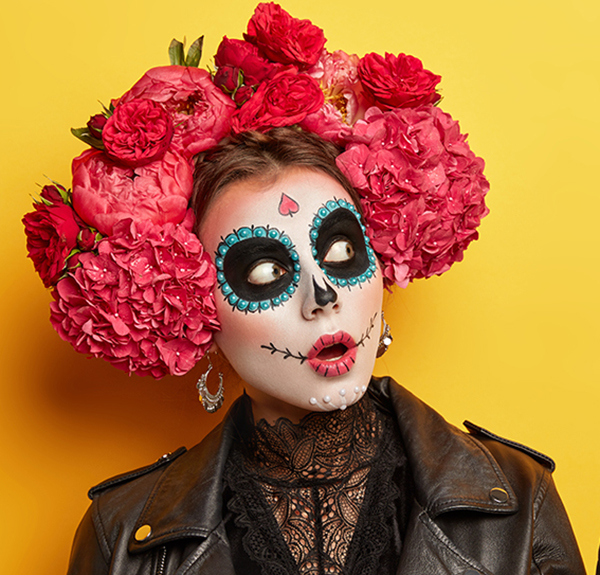
    The celebration of the Day of the Dead has become a popular holiday in many countries. The colorful images of catrinas and skeletons are becoming popular as a symbol of Latino culture.

    But before launching into the celebration, wearing catrina dresses and makeup, it is important that we understand what exactly this tradition and its beauty is about.

    A few years ago, my concept of death was dark, sad, and scary. Seeing a skull image was negative and loved ones who had already died were remembered with great sadness. When I learned about this tradition a few years ago (in my country Colombia is not celebrated and was not popular at the time), I was not sure that I would like to create altars or decorating my house with skulls to teach my kids the tradition, since my husband is from Mexico. I had to first understand fully what the tradition meant and see the reasons for the celebration, to later realize its beauty and how important it can be to see life from another angle.

    Despite being known as a celebration of the Dead, it really is a celebration of life. It is a time of joy, where families honor and lovingly remember people who have already passed away. Teach children that the cycle of life does not end in death, because if you remember your loved ones, they will always be with us.

    The celebration of the Day of the Dead has a long history in the Mexican Tradition and has been named Intangible Cultural Heritage of Humanity by Unesco. It is celebrated every November 1, a period that also marks the culmination of the annual growing cycle of corn in Mexico, the predominant food crop in the country. Although marked throughout Latin America, the Day of the Dead is most strongly associated with Mexico, where the tradition began. The fusion of pre-Hispanic religious rites and Catholic holidays (the Day of the Dead is celebrated on All Saints’ Day and the Day of the Dead, minor holidays in the Catholic calendar) brings together two universes, one marked by indigenous belief systems, the other by traditions introduced by Europeans in the 16th century. The celebration as we know it (or as we normally see it in books or in the movie “coco”) is traditional in Mexico. However, other countries like Guatemala, Ecuador, Bolivia, and Peru also have their own traditions.

    Mexican Celebration

    Mexicans have a tradition to celebrate the lives of those who have died, bringing them food, drinks and music that people enjoyed in life. Many of the celebrations take place directly in cemeteries, (pantheons), when the family goes and visits the grave of their loved ones and brings them what they liked the most. The pantheon goes from being a gloomy place to becoming a space for party and celebration.

    It is also a tradition to place altars in houses. Altars, or also known as offerings, is a place to display portraits, place favorite foods, and special possessions of loved ones. The altars are also decorated with candles and marigolds; candlelight and the scent of flowers (called cempasuchitl) are said to attract the souls of the deceased for a short time to partake of the pleasures they once enjoyed in life.

    The most familiar symbol of the Day of the Dead are calacas y calaveras (skeletons and skulls), which appear everywhere during the holiday: in candied sweets, parade masks, dolls, etc. Calacas and skulls are always portrayed as enjoying life, often wearing fancy clothes, flower headbands, and even funny poses.

    The bread of the dead is an important element of the offering and is much loved and enjoyed during this holiday.

    Imagen: Guatemala.com

    Imagen: Universal.com

    Celebrations in other Latino countries.

    Little is known to the world about the traditions of the Day of the Dead in other Latin American countries.

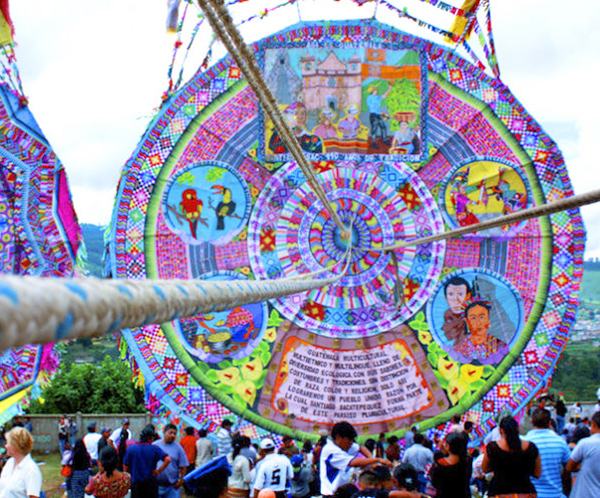
    Guatemala, for example, also has a tradition of visiting cemeteries accompanied by food and drinks enjoyed by the dead. In Santiago and Sumpángo Sacatepéquez the flight of giant kites is one of the most admired shows of this day. The fundamental objective of this ritual is religious and cultural, since the inhabitants consider it a communication link with the loved ones who are deceased, during the celebration the souls of the deceased visit the earth and the kites act as messengers, and that at each rope pull a message of peace and well-being is sent, until the spirit of the deceased is raised together with the kite. This tradition was declared a cultural heritage of Guatemala on October 30, 1998.

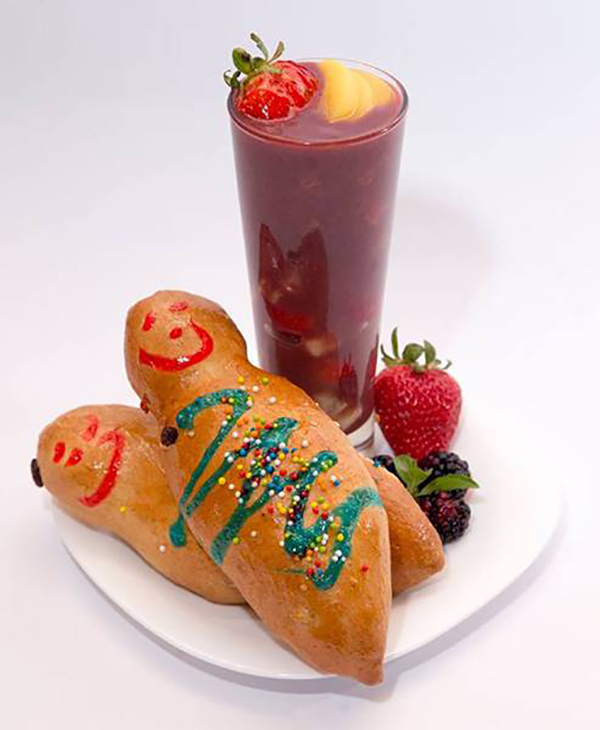
    In Ecuador they usually make bread rolls in the shape of humans, which they call guaguas. These muffins are a symbolism that represents those who have already passed away. The bread is usually accompanied with a drink of purple corn and fruits, known as colada morada.

    Bolivia shares a tradition very similar to that of Ecuador. They have the tradition of making loaves in the shape of little people, which they call tantawawas. As in Mexico, they also usually place altars or tables which they also call apxatas and which they decorate with flowers, candles, and food.

    What other traditions do you know about this day? How do you usually celebrate it in your family?

    Remember that talking about cultural traditions with your children is a great way to introduce them to other cultures and learn to respect them. Talking about the traditions of your own country is a great way to teach them to embrace their roots and feel part of them.

    Here I share this very nice video about the Day of the Dead in Mexico. Ideal for teaching tradition to the little ones.

    This is a cute and short video, made especially for children. There are no words, only music.

    The film won the gold medal at the 2013 Student Academy Award for Best Animated Short Film.

    Live and share your culture

    If you found this post useful, help me to continue sharing our traditions!

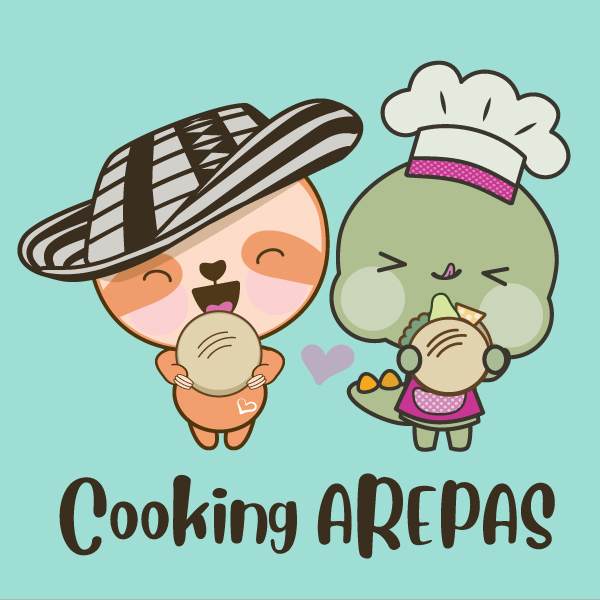
    Cooking Arepas with Choko

    Cooking Arepas with Choko

    Colombian and Venezuelan Arepas Recipe.

    Por: Camila Garcia Voelkl.

    “Arepas” are cornmeal round and flat cakes that originated hundreds of years ago in Colombia and Venezuela. It is a typical meal that is cooked on a rack, pan-fried or baked. They can be served as bread or use them for sandwiches with fillings such as cheese, beans, chicken, meat, veggies or many other options.

    At home, my kids love arepas at breakfast, snack or even dinner. They love how versatile they are and how they can be combined with their favorite toppings. As a Colombian, I love to see them eat their arepas with such taste and pride.

    My husband is Mexican, and he likes his arepa alongside some good beans, hot sauce, and avocado. My oldest daughter loves to top it with guacamole and my youngest loves it with hummus. I personally prefer it plain or stuffed with cheese!

    It does not matter with which you accompany it or fill it, the arepa goes well with everything.

    One of the things I like the most about this recipe is how easy it is to prepare, and it has allowed my daughters to join while cooking and share as a family, especially my youngest daughter, who is currently 6, loves to make the dough and form the arepitas using a tortillera (exactly, we do not have arepera, but we do have tortillera and they work the same).

    Here is the recipe and if you make it at home, I would love to see you in action or the result. You can share your experience on Facebook or Instagram with the hashtag #arepasamigobilingue


    Colombian and Venezuelan Arepas – Recipe

    Prep:           10 mins
    Cook:          10 mins
    Total:          20 mins
    Yield:          6 arepas

    INGREDIENTS

    2 cups of corn flour
    2 cups of water
    Pinch of salt
    Avocado or olive oil (Spray)

    *optional: 1 cup of mozzarella grated cheese. If added, the recipe is not dairy free anymore unless you use a plant based type of cheese.

    Mix water, corn meal, mozzarella cheese (optional), PINCH oF salt together in a large bowl. Knead until mixed well and the dough has a soft consistency.

    Form balls the size of a medium orange and shape them as a semi flat circle or place them between 2 sheets of plastic wrap and Flatten with a rolling pin to your desired thickness.

    Coat a griddle or frying panwith cooking oil spray and heat to medium-high. Add arepas and grill until golden brown, about 5 minutes per side. Serve immediately.

     Arepas have a mild flavor so they go well with almost everything. You can try using two flat Arepas or one opened in half and filled it with your choice of shredded chicken, meat, vegetables, chesses, beans, hummus and much more.

    Similar to arepas are the mexican “gorditas” and the salvadorian “pupusas”. They are also round flat corn cakes Gorditas are puffed up when fried in oil, forming an air pocket which is later filled. Pupusas are flatter and made with a corn flour stronger in flavor than the one used for arepas.


    AT HOME

    You can download, print and share the recipe with family and friends. Here is a PDF for you to keep. Available in English and Spanish!

    The natural approach for second language aquisition

    The natural approach for second language aquisition

    Becoming bilingual doesn’t have to be hard.

    By: Camila Garcia Voelkl.
    Written for Michuchutren, Spanish immersion center

    Let me start by asking you how did you learn your mother tongue? How many classes did you take to learn how to call your mom or how to ask for more food when you were a baby? None. 

    We, start learning our first language since we are in our mother’s womb by listening and trying to make sense of sounds. Once we are born, we create associations between images and sounds, making sense of words and their meanings. We learn through listening, watching, and daily experiences. Your mother tongue makes sense because you can use it to fulfill your needs (Asking for more food, demanding attention, playing) and because with it, we can express our feelings to the people around us.

    When our children are learning to talk, we do not worry about buying workbooks or following a specific method to teach them the grammar and rules of the language. Once they have enough knowledge of the language and the right age, they start reading, comprehending, and understanding the rules. This process takes years, right?

    Well then, why do we expect the acquisition of the second language to be different? Why do we think we need a precise curriculum, lots of workbooks, and tedious grammar lessons to teach our children a second language?

    Let me tell you about the theory of “The natural approach” developed by Professor Stephen Krashen and education theorist Tracy Terrell in the late 1970s.

    The Natural Way Approach

    Following the logic of what I was telling you before, the natural approach is based on learning a second language in the same way we learned our first. Our brains are capable of learning as many languages as we want to (the younger, the better) and, each person learns them at their own pace.

    If we compare five kids at the age of 2, will they all have the same vocabulary, language abilities, and same pronunciation? No, they are all different not only because of the degree of exposure to the language but because of their own learning capabilities. The same happens when learning a second or third language.

    The Natural way is developed to learn in the same way we learned when we were babies. The teacher speaks only the target language (Full immersion) and students may use either the first or second language while they acquire a better understanding of the target language. The class is devoted primarily to provide input for acquisition. So, what does this mean:

    The main goal is to comprehend/understand by listening and making associations with previous knowledge before the student starts trying to repeat and learn how to talk in the language.

    The class is developed by creating interest and making the topic relevant for the student. Why does a kid want to learn a second language if they do not feel it is actually useful for them? Or has nothing to do with what they like or not? Therefore, the natural way encourages the interest of the students through their personal interests.

    The intend is not related to grammatical rules. The main objective is not to learn the correct way of writing or saying something but to focus on the goal of being able to communicate. Let’s go back to the example of the toddler learning to talk. It is cute to hear a baby babbling and trying to figure out how to say something, isn’t it? Then, we need to see the process of the second language in the same way. It is totally fine to have a “babbling” phase where the student is trying to find the words to communicate something without paying attention if it is grammatically correct.

    Students do not have to talk in their second language until they feel they are ready, and there is not a specific time-lapse for that. There are children who in a couple of months will feel comfortable enough to start trying to “babble” and some may take years to get to that point.

    Juan Diego ' Virgen de Guadalupe

    Acquisition requires meaningful interaction in the target language – natural communication – in which speakers are concerned not with the form of their utterances but with the messages they are conveying and understanding”.

    (Stephen Krashen)

    Therefore, if you are thinking about learning a second language or teaching it to your children, think about it as a process, not a result. The learning journey takes a lifetime (same as with your main language in which you continue learning new words and concepts throughout your whole life). It is not a timed process and, there is no rush to be perfectly proficient. It should go naturally with your own learning process.

    Remember that the main purpose of learning another language is being able to communicate with others, so:

    Juan Diego ' Virgen de Guadalupe


    • Focus on communication and not on perfection.
    •  There is no need to go through extensive use of conscious grammatical rules since the beginning.
    • Go beyond the books and look for meaningful experiences.
    • Get immersed in the language from the beginning, do not look for translations.

    Enjoy the journey!

    If you find this post helpful, help us share it with other parents to raise awareness of cultural diversity. Join our mailing list and become and Amigo Bilingue.

    Life is a carnival and whoever lives it is who enjoys it!

    Life is a carnival and whoever lives it is who enjoys it!

    Por: Camila Garcia Voelkl.

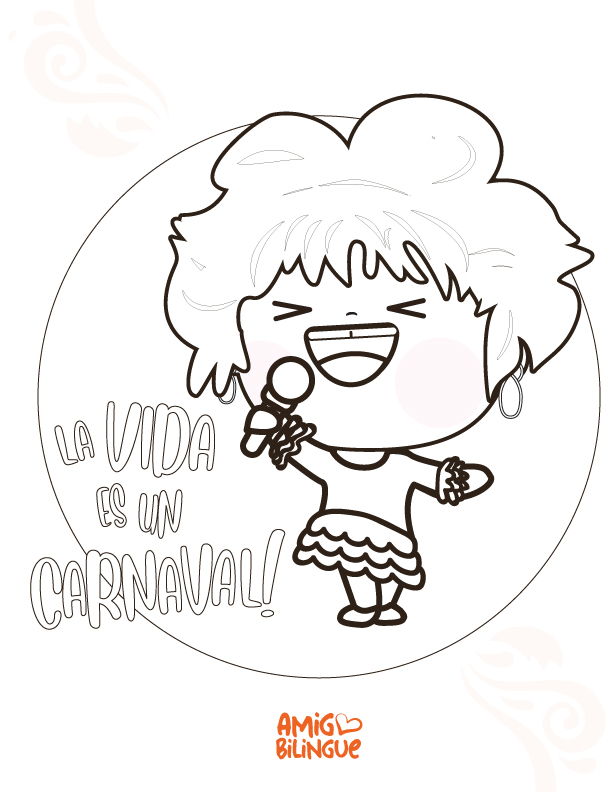
    As the Cuban singer Celia Cruz said, life should be a carnival and we should live it with joy. Sometimes life brings us difficult moments, but in the bad, there is always something good to learn as long as we maintain a positive attitude towards it.

    If life is a carnival, you have to laugh, you have to cry and you have to live singing. Perhaps this is the philosophy that our ancestors wanted to share when carnivals were created, a celebration that wastes dance, laughter, joy, and life.

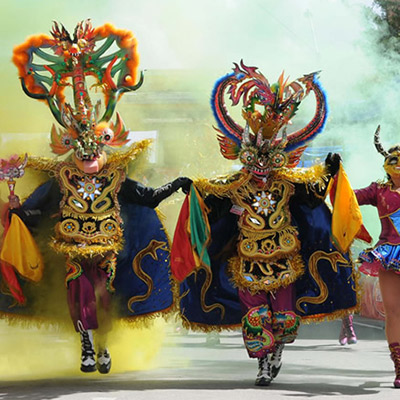
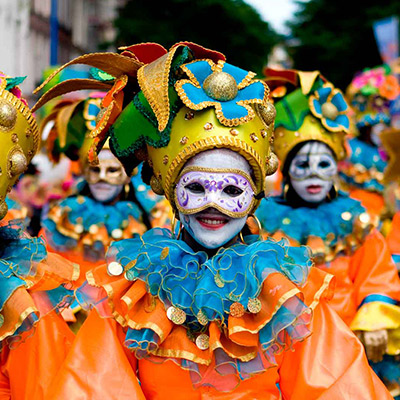
    The slogan of Barranquilla’s carnival says it all: To enjoy carnival you have to live it and feel it in your heart. Carnivals are cultural traditions full of music, folklore, dance, and tradition. These parties are one more way of understanding a specific culture as they bring together elements and social characteristics in a lively and dynamic representation.

    Carnivals can be considered intangible cultural heritages because they contain traditions inherited from generation to generation which become a testimony of culture.

    We have all heard about the Carnival of Rio de Janeiro in Brazil, one of the most recognized worldwide and represented in films and art as a symbol of Carnival. However, all countries have carnivals. Some larger than others, each carnival is part of the culture of their country. Knowing more about them and living them is a way of transmitting culture. Have you ever witnessed and/or participated in a carnival? Here are some recommendations for recognized Latin American carnivals:

    Carnaval de Barranquilla en Colombia

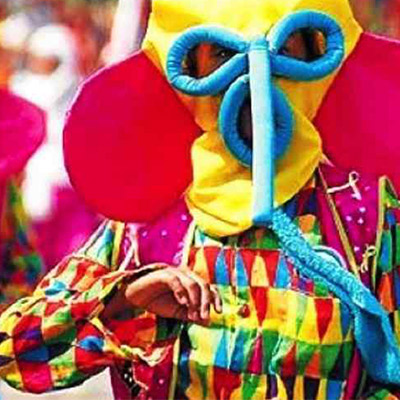
    Distinguished since 2003 by UNESCO as a Masterpiece of the Oral and Intangible Heritage of Humanity thanks to the expression of the cultural manifestations of its riverside populations and their ethnic miscegenation. This carnival is the largest folkloric celebration in Colombia and one of the largest carnivals in the world. With more than 100 years of tradition, the carnival is characterized by its colorful costumes of recognized characters who dance in the streets to the rhythm of the cumbia, the porro, the bagpipe, and the puya. Learn more about the carnivals of Colombia

    El Carnaval de Ayacucho, Perú.

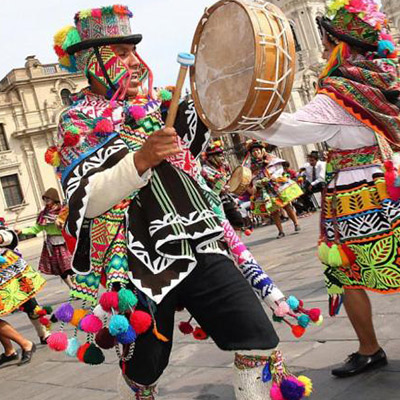
    This carnival is a sample of Peruvian culture and has its origin in the celebration of the land, nature, and the mixture of indigenous and Spanish traditions. The carnival is full of dance, music, and pompous costumes full of colors and typical Ayacucho ribbons. The carnival pays tribute to the Pachamama (Goddess of the earth)

    Carnaval de Montevideo, Uruguay.

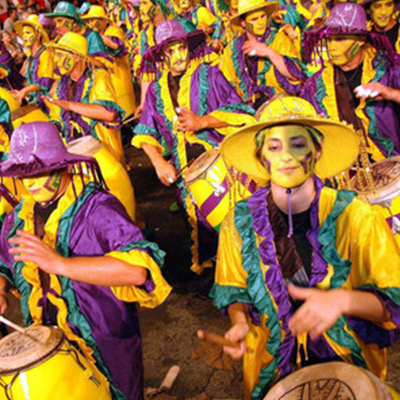
    This is considered the longest carnival in the world. It lasts 35 days, where the Uruguayan capital dresses in colors and fills the streets with comparsa and great dances. The carnival is characterized by murgas, a theatrical-musical genre that perform the main themes of the year, generally with great political and social content. Another characteristic of the festival is the mixture of traditional African festivities, to the rhythm of Candombe, a style of percussion and dance.

    Carnaval de Oruro, Bolivia.

    Oruro was an important center for pre-Columbian ceremonies before becoming a mining center. This carnival was recognized by UNESCO as a national heritage. It is characterized by being a fusion that mixes the indigenous traditions of before the colony and religious traditions imposed after the arrival of the Spanish. The most important icon of the festival is “El tio”, a character who was considered to be the owner of the mines and who becomes the Devil of the carnival. Hoping that he doesn’t get mad about taking his precious metals, during the carnival, the miners dance and leave him gifts.


    Carnaval de Veracruz, México.

    For nine days the port of Veracruz in Mexico dresses up in one of the most joyous carnivals and ¨bullangueros in Mexico. The carnival begins with the burning of ¨Del Bad Humor¨ where the destruction of the negative things that have happened in the country or the region is represented. The carnival ends with the farewell of the character: Juan Carnaval who represents fun and excess.

    Learn more about other festivals and Carnivals in Mexico 


    ACTIVITY

    Encourage children to learn more about carnivals, dress up and dance to different rhythms. Here we leave you a PDF of several carnival images to color.


    Find more things that may interest you about Culture in our Blog.

    The day of the dead

    The day of the dead

    The day of the dead in LatinAmerican countries Por: Camila Garcia Voelkl. The celebration of the Day of the Dead has become a popular holiday in many countries. The colorful images of catrinas and skeletons are becoming popular as a symbol of Latino culture. But...

    Identity is given to us, but the identification, we must build it.

    Identity is given to us, but the identification, we must build it.

    The importance of identification in multicultural children’s development. 

    By: Camila Garcia Voelkl.

    Have you asked yourself the question, who am I? What is defining me and my identity? Have you asked the same question to your child?

    This is not a post about philosophy or existentialism. This is also not a matter of to be or not to be, as Hamlet once wrote. Today I want to talk with you about the importance of self-identification to understand diversity, racism, and create cultural awareness and why we, as parents, need to take the matter into our own hands.

    As someone working with parents and children of many backgrounds, I learned about the importance of children developing a good sense of their identities, and most importantly, about building identification.

    When someone asks us who we are, we normally start with our names, gender, and where we were born. All these are aspects that will remain the same in our life. However, we are more than that. When we talk about identity, we also refer to aspects such as religion, professions, skills, and personality traits. These concepts are related to our self-identity plus our social identity which are greatly influenced by our interactions with the environment, therefore, it changes through our life stages.

     Self-identity is in general sense self-awareness, how much we know about ourselves and what we like, and dislike our beliefs, and what we identify with. Just as self-esteem, it is very important for children to develop in their early years so they can build a strong sense of who they are. A positive sense of identity is crucial to the development of self-esteem and confidence.

    But identity does not come alone. Every child has a social identity as well, which provides them with a sense of belonging. Social identity can come from being part of a community based on ethnicity, religion, shared language, or nationality. For children, this social identity is closely related to what we, as parents consider is “like us”.

    Juan Diego ' Virgen de Guadalupe

    “Having a sense of group identity as well as a personal identity also helps a child feel a sense of belonging”.

    (Pulido-Tobiassen & Gonzalez-Mena, 1999)

    In diverse families and communities, children learn to expect variations in how people, look, act, feel, and they see these variations as normal. 

     In my case, for example, I was born and raised in Colombia. Variations in the environment were given by religion, economical status, gender but cultural differences were rarely seen. Children like me, who spend their early years in homogeneous families and communities associate themselves with a specific language and culture. This is not the case of my daughters, who, unlike me, are growing immerse in a culture and language that differs from that of their parents. They are used to see people from different countries, colors and listen to different languages and accents and at home, they experience traditions that do not relate to the ones of their friends.


    In diverse families and communities, children learn to expect variations in how people, look, act, feel, and they see these variations as normal. 

     In my case, for example, I was born and raised in Colombia. Variations in the environment were given by religion, economical status, gender but cultural differences were rarely seen. Children like me, who spend their early years in homogeneous families and communities associate themselves with a specific language and culture. This is not the case of my daughters, who, unlike me, are growing immerse in a culture and language that differs from that of their parents. They are used to see people from different countries, colors and listen to different languages and accents and at home, they experience traditions that do not relate to the ones of their friends.


    For a multicultural and multilingual family like mine, what is the role of identity and identification?

    Children develop a sense of differences since they are born. They will differentiate between their mom’s voice or the voice of a stranger. After several months they can imitate and identify with others in their lives. By the age of three, they are able not only able to distinguish between color and physical differences but also will become aware of differences in language and behaviors.

    Their sense of identification starts to build up as they associate themselves and their self-identity with one of the others. So, if you are an immigrant like me, or come from a family of immigrants, you may be familiar with the problem of identification inside a multicultural environment.

    Has it happened to you that your children come with questions about their cultural or linguistic differences?

    When my older daughter was in 1st grade she came one day asking: Mom, how come I speak differently from my friends? She had noticed that even though she spoke English with other kids, her accent was not the same. There was another time when my youngest was worried about her Thanksgiving work. She was asked to say what type of food she liked best for thanksgiving and was given the options of turkey, pumpkin pie, sweet potato, and others. But, although my family has adopted the tradition of coming together as a family to give thanks, our food is generally Latin food from our country so she was not used to anything the teacher gave her as an example.

    In times like this is when children start thinking about what exactly do they identify with? With the culture and language from the country they were born, the one they are living in, the one from home, and their parents? 

    How children learn to appreciate differences depends on the social meaning attached to them. When children perceive an uncomfortable reaction from someone else about something they are used to, they become alerted as if it is something negative. In those cases, if children have not built a strong identification with that aspect of their identity, they will feel threatened and even try to avoid it. 

    That is the case, for example, of children who have been told at school that it is not ok to use another language different than English. Some children will later refuse to talk to their parents in their heritage language just to feel identified with their friends.

    But things do not need to go this way. Children need to be reassured that differences are fine and understand where they belong in their society. Therefore, we cannot deprive them of the need to understand their roots, to learn the language, to feel that they also belong to that community that is part of their self-identity.

    How do we foster identification in our children?

    Sense of belonging. 

    If you are Latino or have Latino descents, then you belong to that community. Well, it is easy to say it but how to feel part of it. AS I was talking at the beginning, my identity says that I was born in Colombia and I feel Colombian and proud of it because I relate to the culture. The same happens to my husband who is from Mexico. But it is not the same for my daughters, who are both born in the U.S with a mix of traditions and language. So, even though their self-identity is related to the Latino community that doesn’t mean they identify with it unless I help them create that identification. Now, how can we do that?

    Juan Diego ' Virgen de Guadalupe
    •  Teach them the Language. Language and culture are closely related and dependent on each other. They influence the way we see ourselves and can determine the groups with which we identify. It is never too early, never to late to start.
    • Respond to children’s questions about why you do certain things the way you do them. Why does Dad add Chile to everything? Asked my daughter once. These are the type of questions that we need to take advantage of to explain them more about the culture If you are unsure about an answer, just tell them you will find out later, or even better, take the opportunity to ask another family member, maybe grandma, about it.
    Juan Diego ' Virgen de Guadalupe
    • Promote stories. Take a photo album out and promote stories about your culture and country. Tell them what you liked to do when you were little, the games you liked the most, the songs you used to sing.
    • Music plays an important role in identification. Latin music has given Latinos a sense of pride in their heritage and identity. For many Latinos, listening to Latin music is a way to embrace their heritage and identity. Put on music in Spanish, share your favorite artists with them or teach them some typical dances.
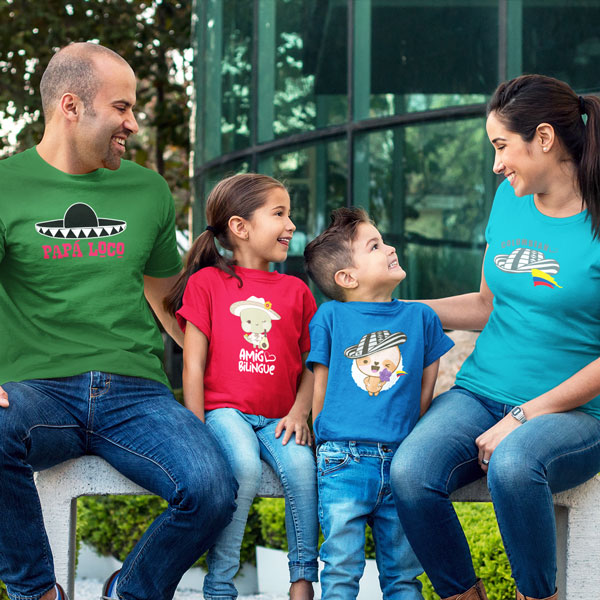
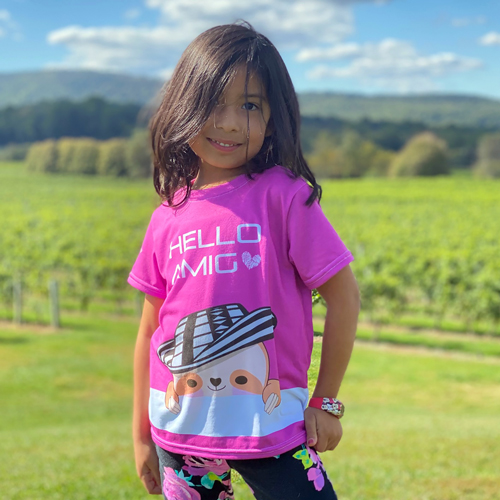
    T-shirt Choko Hello Amigo
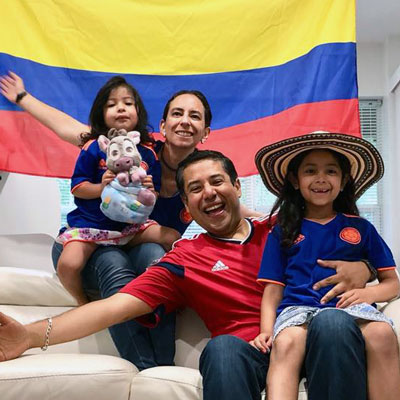
    • Do not be afraid of showing the world where you come from, celebrate your heritage. Talk to them about your culture and language with pride. Share your flag, clothes, traditions, food with others and feel proud of them. Children learn by example and if they see that there is nothing to feel ashamed of about their heritage, they will grow stronger and will be able to fight against possible discrimination.
    • Build a friendship with other Latino families. When children see other children, who share traditions and language with them, they build a stronger sense of belonging. They have someone else to share experiences with and feel the support of a community that empowers them in their culture.

    Building identification is easier in some contexts than in others. As Latino parents raising kids in multicultural and multilingual environments, we need to help our children understand who they are and empower them to learn and accept their differences and create a feeling of belonging.

    This identification with our heritage cultures and languages is crucial to the child’s development and brings many benefits not only to them but to society. 


    • Cultural and linguistic diversity is the common heritage of humankind and should be cherished and preserved for the benefit of all.
    • Developing your understanding of other cultures, or ‘cultural awareness’, lets you have more meaningful interactions with those around you.
    • You are building your respect and empathy for other people and celebrating your differences as well as your similarities.
    • Help children and therefore future adults to have a positive sense of themselves.

    With a generation empowered and proud of their roots, but more importantly, truly identified with them, the fight against racism and discrimination becomes easier. When you show the world pride in who you are, the world learns to respect you. 

    If you find this post helpful, help us share it with other parents to raise awareness of cultural diversity. Join our mailing list and become and Amigo Bilingue.

    The day of the dead

    The day of the dead

    The day of the dead in LatinAmerican countries Por: Camila Garcia Voelkl. The celebration of the Day of the Dead has become a popular holiday in many countries. The colorful images of catrinas and skeletons are becoming popular as a symbol of Latino culture. But...

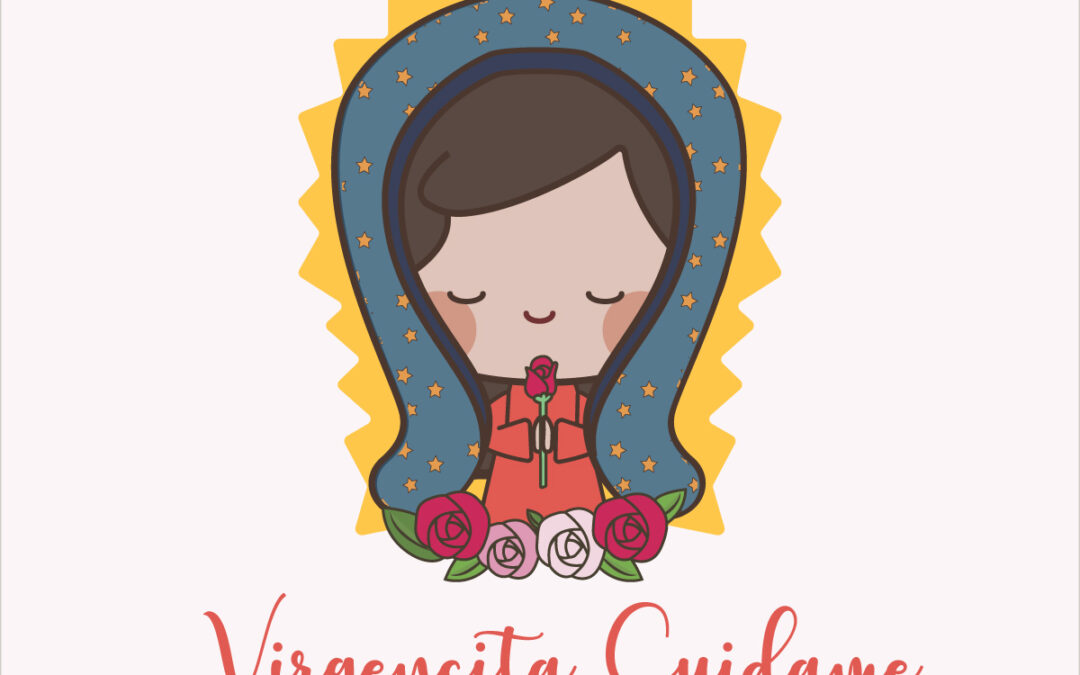
    Patroness of the Americas: Our lady of Guadalupe, take care of me.

    Patroness of the Americas: Our lady of Guadalupe, take care of me.

    Our lady of Guadalupe.

    Por: Camila Garcia Voelkl.

    When we talk about Mexican culture, we cannot fail to mention the Lady of Guadalupe who is not just a religious icon, but is rooted in their history and identity. The Guadalupana is present in all the traditions, music, art and history of Mexico and it is easy to find her image in various parts of the city and in most homes.

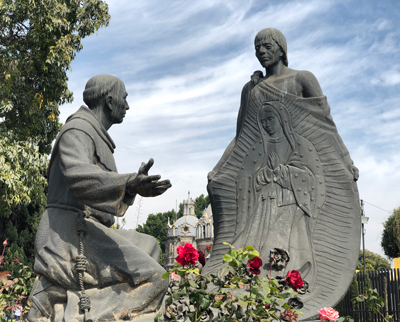
    Our Lady of Guadalupe appeared between December 9 and 12, 1531, on the Mount of Tepeyac, in front of an Indian named Juan Diego and asked him to go to the bishop to ask him to build a temple there.

    Juan Diego spoke with the bishop and told him what had happened, who, incredulous, asked him for proof of the virgin’s appearance. In the second apparition, the Virgin asks Juan Diego to return the next day and she will give him a sign, however, the next day, Juan Diego cannot go because his uncle Bernardino was very ill and had to look for a doctor. In the early morning of December 12, Juan Diego hurried off to find a priest for his uncle because he was dying and he avoided passing where he always met the Virgin. Suddenly the Virgin Mary came out to meet him and he said that he should not worry about his uncle, because he was already healthy but that he should go up to the top of the hill and there he would give him the signal.

    Juan Diego ' Virgen de Guadalupe

    At the summit Juan Diego found several fresh Castilian roses, which was very rare since they were in winter and the roses did not grow at that time. Juan Diego cut them and put them in his Tilma to take them to the bishop.

    When Juan Diego unfolded the Tilda (his blanket) to show the bishop, the image of who today is known as the Virgin of Guadalupe was painted on the tilma.

    What day is the Virgin celebrated?

    December 12, the last day that the Virgin appeared to Juan Diego, was chosen as the day of the Virgin of Guadalupe. At dawn, Mexicans honor the Virgin with a serenade, singing las mañanitas to her and visiting the Basilica of Guadalupe in Mexico City. Although the celebration began in Mexico, it is also celebrated in other countries of the world such as the Philippines or the United States. In the city of Chicago, the second largest Guadalupana festival takes place after Mexico City.


    ACTIVITIES

    Encourage the children to use different colors to create a beautiful image of Our Lady of Guadalupe or find the words in the word search activity

    Download the image and print it on a letter size sheet (8×11).

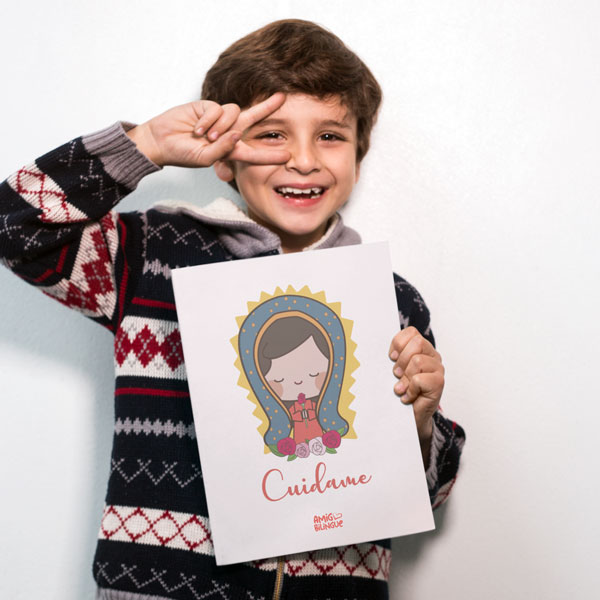
    This is a cute printed poster of Our Lady of Guadalupe with a message that says “Take care of me.” Three different sizes to choose from.

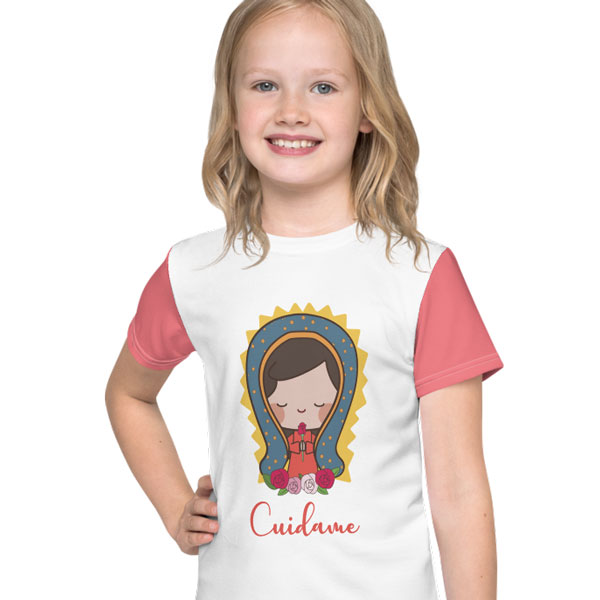
    Children can also wear the virgin with their “Take care of me” t-shirt. A nice way to share your beliefs and culture.

    Let’s Burn The Old Year! Join The Tradition.

    Let’s Burn The Old Year! Join The Tradition.

    Leave behind the year that is ending and welcome the new year.

    Por: Camila Garcia Voelkl.

    2020 has been a year like none. I think we all agree that one of the things we want to eliminate this year is the virus that has brought us so much trouble. However, we can also rescue the life teachings that it has left us. I invite you to know the Latin American tradition created to burn (literally) the old year and receive the new year with the best energy.

    What is ¨el año viejo o Monigote¨?

    Juan Diego ' Virgen de Guadalupe

    Some Latin American countries still preserve the ancient tradition of making a rag doll and burning it as a symbol of the year that is ending. It is customary for the doll to have elements that characterized the year that is leaving.

    The old year or Monigote represents the year that ends and the things we want to leave behind. In some places, it is accompanied by a will. During its burning, the will is read and the moments lived during the year that we want to forget and those that we have to be thankful for are remembered.

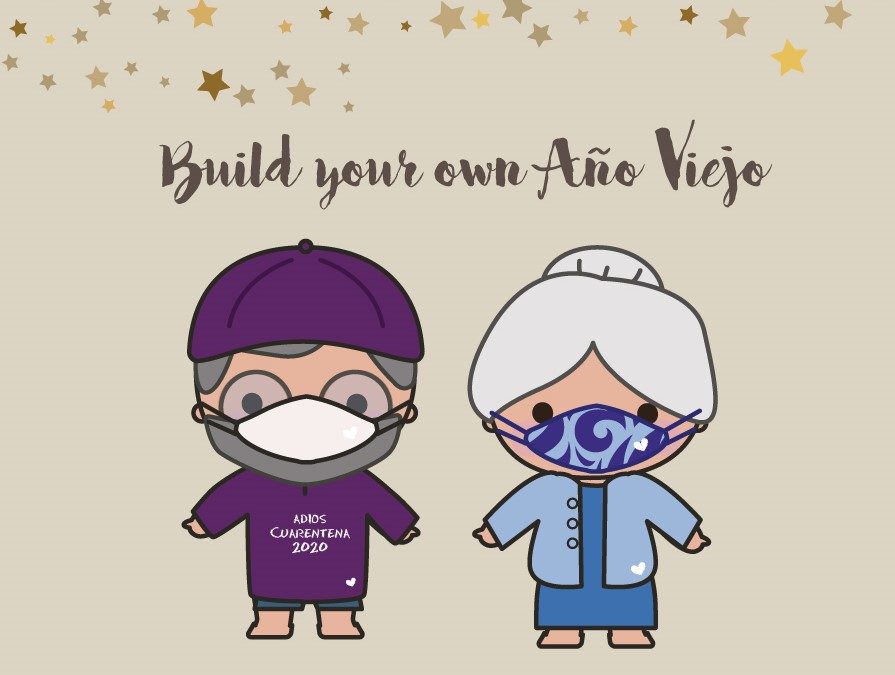
    Build your own Old Year Doll:

    For those of us who are far away from our home country or do not have the time, disposition or materials to make our own rag doll, I have created a printable version that you can customize with different clothes and accessories.

    Download the PDF, print, build and leave the year behind!

    FREE PDF DOWNLOAD - Baja el PDF gratis.

    • 1. Cut out the dolls, clothes, and accessories.

      2. Dress your doll as you want it to represent the year, gluing clothes, hair, and accessories over it.

      3. Write on the cards 5 things you want to forget, 5 to be thankful for and 5 resolutions for the new year.

      4. At midnight on December 31st, destroy your doll along with the things you want to forget about the old year. If you have a safe place, place the doll in a fireproof container to burn it (Be very careful where you do it!). You can also symbolize his leaving by tearing him to pieces.

    If you found this post useful, help me to continue sharing our traditions. Share your tradition with us on Instagram and Facebook. Tag @amigobilingue

    greeting_dialog_display=”hide”